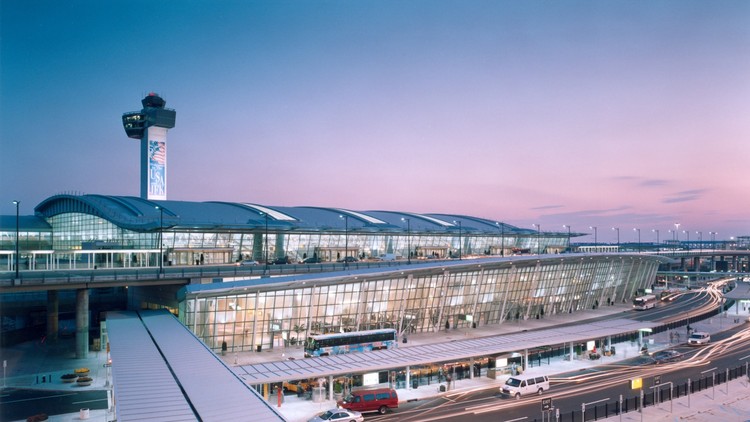

Record Airport Congestion Heading Into 2026 Is Reshaping Executive Travel — Why Professional Airport Transfers Are Now Essential
As global business travel accelerates toward 2026, airport congestion has shifted from an occasional inconvenience into a constant operational challenge for executives and corporate travel teams. What was once limited to holidays or peak summer travel has become a year-round reality affecting major airports, surrounding highways, and ground transportation systems nationwide.
For executives, senior leadership teams, and corporate decision-makers, the tolerance for disruption has diminished significantly. Delayed departures, missed connections, and unreliable airport pickups now translate directly into lost productivity, strained schedules, and reputational risk. In response, executive airport transportation is no longer viewed as a premium add-on — it has become a strategic component of professional travel planning.
At K & G Limousine, we work with corporate travelers who require predictability, discretion, and precision in an environment where congestion has become the norm rather than the exception.

Airport Congestion Is No Longer Seasonal — It’s Built Into the System
Aviation and transportation data indicate that elevated passenger volumes are expected to continue well into 2026. Corporate travel has rebounded strongly, international routes are expanding, and major U.S. airports are operating near capacity far more frequently than in prior years.
Several structural factors are driving this shift:
-
Sustained growth in executive and corporate travel
-
Expansion of international commerce and cross-border meetings
-
Aging airport infrastructure with limited expansion capacity
-
Ongoing staffing constraints across airport operations
-
Increased curbside congestion and restrictions on ride-hail services
For business travelers, this means delays are no longer exceptions — they are part of the operating environment. Flights may arrive on time, but ground transportation bottlenecks, terminal congestion, and roadway delays now routinely disrupt schedules.
Executive airport transportation services help mitigate these risks by introducing planning, coordination, and accountability into a system that has become increasingly unpredictable.
Why Ground Transportation Has Become the Weakest Link in Executive Travel
Airlines and airports have invested heavily in technology, scheduling tools, and operational efficiency. Ground transportation, however, remains the most volatile segment of the travel journey.
Executives frequently encounter:
-
Traffic congestion extending miles beyond airport entrances
-
Overcrowded rideshare pickup zones with long wait times
-
Confusing terminal-specific pickup rules that change by airport
-
Inconsistent vehicle availability during peak arrival windows
For travelers operating on fixed schedules, these uncertainties are unacceptable. A delayed pickup can erase carefully planned itineraries, compress meeting windows, or force last-minute changes that affect multiple stakeholders.
Pre-arranged executive airport transportation replaces uncertainty with structure. Chauffeurs are scheduled in advance, arrival times are planned around congestion patterns, and accountability is built into the service model.
The Most Congested U.S. Airports Heading Into 2026
John F. Kennedy International Airport (JFK)
JFK continues to rank among the most challenging airports in the United States for ground transportation. Ongoing terminal redevelopment, combined with heavy international traffic, has created persistent curbside congestion throughout the airport.
Executives arriving at JFK often experience extended waits when relying on taxis or rideshare platforms. Professional airport transfer services that monitor flights in real time and stage chauffeurs strategically provide a more reliable alternative.
Los Angeles International Airport (LAX)
LAX’s layout and traffic volume make it particularly difficult for on-demand transportation. Ride-hail pickup areas are frequently overcrowded, and access timing is poorly aligned with peak arrival waves.
Executive travelers increasingly rely on scheduled airport transfers that understand terminal-specific access points and adjust arrival timing to minimize delays.
Hartsfield-Jackson Atlanta International Airport (ATL)
As the world’s busiest airport by passenger volume, ATL experiences daily traffic congestion well beyond airport boundaries. Roadway delays are common, particularly during peak business travel hours.
Executive airport transportation services that incorporate real-time traffic analysis and alternate routing strategies help maintain schedule reliability at ATL.
Chicago O’Hare International Airport (ORD)
Weather volatility and dense flight schedules make ORD one of the most delay-prone airports in North America. Late arrivals, missed connections, and overnight disruptions are common during high-traffic periods.
A dedicated airport chauffeur service provides continuity regardless of weather or operational disruptions.
Miami International Airport (MIA)
Miami’s emergence as a global financial and corporate hub has transformed airport traffic patterns. Congestion is now a year-round issue rather than a seasonal one.
Advance-booked executive airport transportation has become standard practice for business travelers moving through MIA.
Why Rideshare and Taxi Services Fall Short for Executive Travel
As congestion intensifies, standard transportation options struggle to meet executive-level expectations.
Inconsistent Availability
Vehicle availability becomes unpredictable during peak periods, late-night arrivals, and early-morning departures.
Unreliable Pickup Timing
Even when vehicles are available, congestion at pickup zones often results in extended delays.
Dynamic Pricing Without Reliability
Surge pricing increases costs without improving service quality, professionalism, or accountability.
Limited Privacy and Professionalism
Executives require discretion, consistency, and professional conduct — elements that are not guaranteed with on-demand services.
Executive airport transportation prioritizes certainty over convenience, delivering structured, predictable outcomes.